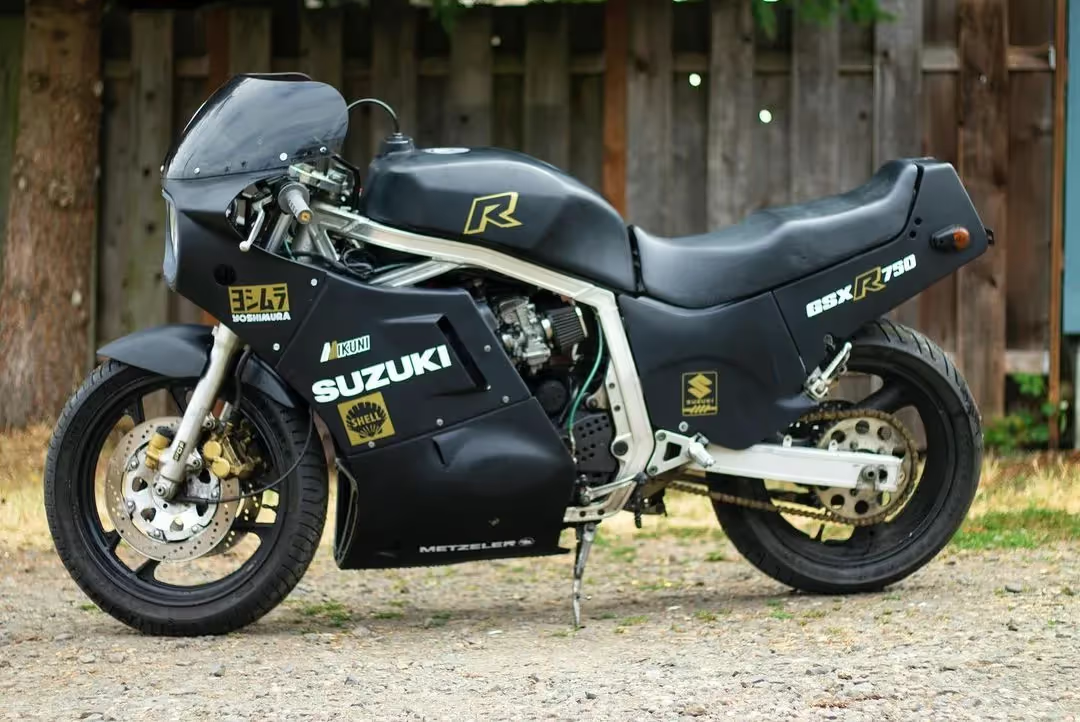
A two-wheeler straight out of the Japanese archipelago
In the mid-1980s, the world of sports motorcycling experienced unprecedented excitement. Japanese manufacturers are racing hard to offer the most efficient, lightest and most innovative models. It is in this context that Suzuki unveiled, in 1985 in Japan and in 1986 in Europe and the United States, its GSX-R 750: a machine that will redefine the very concept of “sporty” and establish itself as one of the absolute references in the segment. For the public as well as for the drivers, it is a real revelation.
At the source of this revolution was an oil-cooled inline four-cylinder engine, based on Suzuki's long racing tradition. Called SACS (Suzuki Advanced Cooling System), this high-pressure oil system is used to cool the block more effectively and limits the total weight of the motorcycle, by saving on a complete liquid cooling system. This technical choice, which seems daring at first glance, is particularly relevant on the track, where lightness is a major asset. Under its tight and aggressive fairings, the GSX-R 750 sports a double-cradle aluminum frame (the legendary “MR-ALBOX”), which was still uncommon at the time. From the start, this combination of lightweight chassis and muscular engine sets the stage for a machine that is resolutely focused on pure performance.
To understand the impact of the 1986 GSX-R 750, you have to go back to the atmosphere of the mid-1980s. Japanese sports cars already exist, but they are often still heavy, or derived from road models with a sporty temperament. With the GSX-R, Suzuki is taking a step forward: rather than creating a road motorcycle full of vitamins, the Hamamatsu firm is developing a racing bike designed for the road. The objective is clear: to offer a “race-replica” offering the whole world the opportunity to get closer to the sensations of the track. The line, inspired by the GS1000R Endurance machine, contributes to this racing atmosphere: plunging fork head with double optics (which will then be replaced by a single rectangular headlight on later versions), high tank and seat tilted forward. Everything exudes speed and radicality.
The marketing of the GSX-R 750 is generating considerable enthusiasm, both in Japan and in Europe and the United States. Speed lovers see it as the realization of their dreams: finally an accessible machine (at least, for connoisseurs) whose technical data sheet rivals those of competition bikes. Its performances, once reserved for an elite, are now within reach of a fistful for any enthusiast with sufficient budget and experience. Its price, while not cheap, remains competitive in terms of what it offers: a sharp chassis, a sparkling engine, and a look directly inherited from the circuits. The result: the GSX-R 750 immediately became an essential reference in the sports category.
Why did she become a legend?
Many sports cars of the time claimed to have the best power or the sharpest handling. So what makes the 1986 Suzuki GSX-R 750 a legend? As with any myth, several ingredients are mixed: exceptional performances, media and cultural influence, and a radical design that spans the ages.
First, there was pure performance: at the time, the GSX-R 750 was a real “game-changer”. We are talking about a power of around 100 hp (some even mention up to 106 hp) for an operating weight well below that of its direct competitors. Such an advantageous power-to-weight ratio gives the GSX-R quick accelerations and a top speed of up to 240 km/h, which remained spectacular in 1986. On the circuits, especially in Endurance, the GSX-R quickly imposes its law. The public sees machines that are very similar to the commercial version, which further fuels the fascination for this “serial” car. Specialized magazines highlight its agility on the track, its driving rigor and its impressive braking (for the time) thanks to ventilated discs.
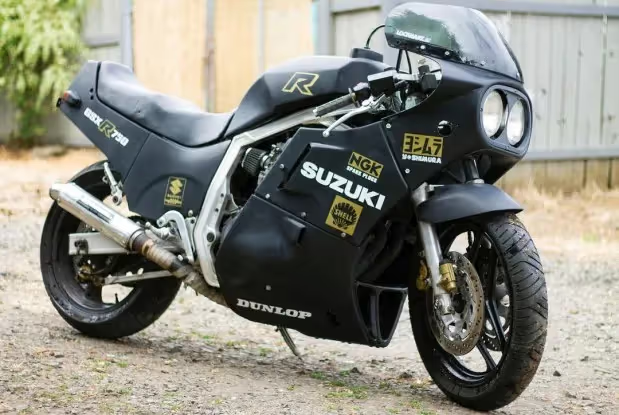
This performance is reinforced by the reputation for robustness of the SACS block. Drivers and mechanics often highlight the ease with which this engine can be adjusted, and its ability to withstand intensive use without flinching — an essential criterion for competition and, in fact, very popular on the road. This reliability contributes to the status of the GSX-R 750: it is not only fast, it is also enduring and accessible to a large audience of aspiring athletes.
Then there's the cultural influence. In the same way as a Triumph Bonneville symbolized the rebellious spirit of the sixties, the GSX-R 750 became for many the quintessence of the sports motorcycle of the 80s. Both amateur and professional drivers identify with this agile and radical machine. The first “track days” for the general public are multiplying, and the GSX-R are taking the limelight. This reinforces the culture of sportsmanship: we want full fairings, bubbles, flashy decals and coordinated leather suits. The image of the “Team Suzuki” sportbike is gaining in popularity, drawing the competition to the top. Yamaha, Honda and Kawasaki will redouble their efforts to offer equivalents, but the GSX-R 750 remains in the collective memory as the first to have truly broken the codes.
Finally, the design of the GSX-R 750 contributes significantly to its legend. Where, in 1986, some sports bikes still maintained a relatively neutral line, the GSX-R displayed deliberately aggressive features. The angular fairings, the blue and white colors typical of Suzuki (sometimes with touches of red), the famous double lens that gives it a determined air... Everything about its silhouette is aimed at speed enthusiasts. In addition to this ultra-dynamic aesthetic, it benefits from a curved tank designed to support the pilot's chest and forearms in a sporty position. The single-seat seat (or with a modular backrest) reinforces this track-oriented bias. Even today, the first generation of the GSX-R 750 remains a retro-futuristic icon, sought after by collectors who appreciate this unique blend of old-school lines and innovations that were significant for the time.
The legacy left by the Suzuki GSX-R 750
It's impossible to talk about the lineage of sports bikes without talking about the colossal legacy left by the GSX-R 750. First of all, it shuffled the cards in the mid-engine sports category. Before her, we usually only found 600s or 900/1000s to talk about radical performances. By positioning itself in this “750 cc” niche, Suzuki has launched a sustainable trend, as other manufacturers will follow suit, offering high-performance 750cc versions in their ranges in turn. For a time, this engine capacity will even become an essential standard in the Superbike championship, before the categories specialized differently (Supersport in 600 cc, Superbike in 1000 cc).
Second aspect of this heritage: the choice of maximum weight reduction and a configuration close to competition. The GSX-R 750 paved the way for a generation of motorcycles designed for the track, which were both more rigorous and more radical in their design. Engineers, at Suzuki as well as at competitors, understood that it was possible to offer a wide audience a motorcycle that was almost “out of the box” racing. This concept of ultra-lightness and direct handlebar performance will inspire other legendary machines, such as the Yamaha FZR 750 Genesis or the Honda VFR 750R (RC30). The idea of developing an aluminum chassis — more expensive to manufacture, but much lighter — will quickly become widespread in high-end sports.
The third part of the heritage concerns motorcycle culture. With the GSX-R 750, the craze for “racing” preparations and circuit trips exploded. Clubs dedicated to GSX-Rs are formed, meetings are organized to discuss engine settings, suspension improvements, or even racing exhausts. The 1980s also marked the rise of extreme sports and speed heroes. Private riders can make a name for themselves by riding GSX-Rs in Endurance, local Superbike or regional events. On the road, the GSX-R becomes an object of pride and conversation: owning this bike means claiming a certain form of radicalism and passion for adrenaline.
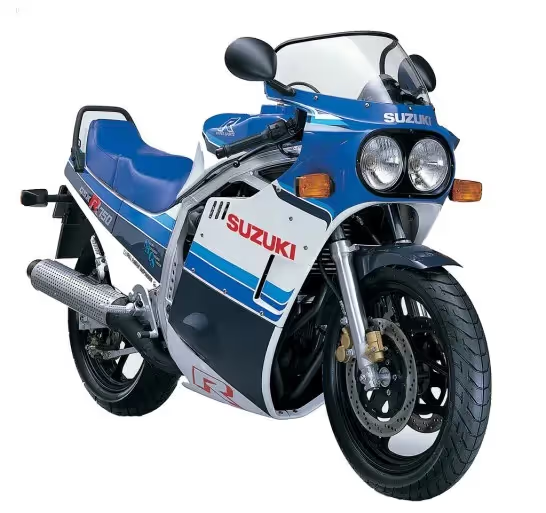
Over the generations, the Suzuki GSX-R 750 has continued to evolve: new frames, increasingly advanced electronic management, refined fairings, improved brakes and suspensions. But the basic philosophy remains the same: to offer a machine that is light, maneuverable, and devilishly efficient on the circuit. The later versions (SRAD in the 1990s, then the K0 to K8 versions, etc.) perpetuate the DNA of the 1986 original. Even the arrival of the GSX-R 600 and GSX-R 1000 later did not overshadow the historic role of the 750, which for many remains the “ideal displacement” — a perfect compromise between the nervousness of a 600 and the strength of a 1000.
Industrially, the GSX-R 750 has given Suzuki a worldwide reputation. Sales soared, both on the Japanese domestic market and across the Atlantic and in Europe. Suzuki was able to capitalize on this success to establish its successful brand image, true to its slogan “Way of Life! ”, while simultaneously developing models that are more accessible (Bandit, SV) or more versatile (V-Strom). However, the GSX-R range remains the sports showcase par excellence, the business card that thrills fans of super sports cars.
Finally, we find the pride of collectors and nostalgic people. The first GSX-R 750s, sometimes called “Slabby” (in reference to its characteristic, flat and rectangular front fairing), are now very popular on the second-hand market. Copies in good condition are becoming rare, and meticulous restorations are flourishing. Fans of retro motorcycles like to revive this icon, a symbol of an era when the race for performance was still very raw, without the current electronic assistance. Classic motorcycle gatherings welcome these sports cars who, more than thirty-five years after their launch, have lost none of their aura.
In short, the 1986 Suzuki GSX-R 750 remains one of the most influential machines in motorcycle history. Her arrival marked a turning point in the conception and perception of sportswomen, by introducing the concept of “race-replica” for the general public, by playing the card of lightness and radicality, and by earning a significant track record. Few motorcycles have redesigned the contours of their category so much. While today, hyper sports cars have evolved towards ever more electronic innovations and powerful engines, the 1986 GSX-R remains etched in people's memories as the daring pioneer who brought an entire sector into the modern era. For fans, getting on this legend means reconnecting with a past where performance was synonymous with pure adrenaline and mechanical control, a time when each turn was negotiated instinctively, with one's eyes fixed on the asphalt, in search of the perfect trajectory.